Hot Water Services in Bardwell Park
1000+ five-star reviews
Cold showers have a way of arriving at the worst possible moment, usually on the first genuinely frosty morning of the season. Your Plumber Bardwell Park keeps the hot water flowing across the suburb's interwar and post-war bungalows, from a quiet single repair to a full system changeover done in a day.
- $0 Call Out Fee
- Lifetime Labour Warranty
- Licensed & Insured
- Lic #275278C
- Licensed & Insured
- $0 Call Out Fee
- Lifetime Labour Warranty
- On-Site Fast, 24/7
- 1000+ five-star reviews
- Real Humans Answer, Day or Night
- Lic #275278C
- Licensed & Insured
- $0 Call Out Fee
- Lifetime Labour Warranty
- On-Site Fast, 24/7
- 1000+ five-star reviews
- Real Humans Answer, Day or Night
- Lic #275278CNSW plumbing licence, fully insured, water and gas
- $0 Call Out FeeIt costs nothing to get us to your door
- Lifetime Labour WarrantyIf it's not right, we come back. No questions. No cost.
- 1000+ five-star reviewsSydney homeowners have rated us five stars over a thousand times
1000+ five-star reviews across Sydney. $0 call out fee. And a fixed price before any work begins. The price we quote is the price you pay. No exceptions.
When your hot water lets you down
Hot water rarely fails politely, and the warning signs are worth knowing before a lukewarm trickle becomes no supply at all.
Most calls we take start with one of these:
Water gone cold or barely warm
A failed element, thermostat or gas burner, often fixable without replacing the whole unit.
Rusty or discoloured hot water
The inside of the tank is corroding, a strong signal the cylinder is near the end.
Pooling or dripping at the base
A leaking tank cannot be patched and needs planning before it lets go across the floor.
No hot water at all
When it is a right-now emergency, our no hot water response gets a plumber to you fast.
Banging, knocking or hissing
Sediment build-up or pressure faults that shorten a system's life if left alone.
Tell us the symptom and we point you to the right fix rather than the most expensive one.
What tends to fail first
Storage units and continuous-flow systems fail in fairly predictable ways, and knowing the usual culprit helps you judge whether a call is urgent or can wait for the morning.
Heating elements and thermostats. On electric storage, these are the most common failures and among the quickest, lowest-cost parts to replace, so a sudden cold tap does not automatically mean a new system.
Sacrificial anodes. The rod that protects the cylinder from rust wears out silently, and a check every few years can add real time to a tank that otherwise looks fine from the outside.
Tempering and pressure valves. A weeping relief valve or a tired tempering valve upsets both temperature and safety, and both are serviceable parts rather than reasons to condemn the whole unit.
The cylinder itself. Once the steel tank corrodes through, no repair holds, and a puddle at the base is the plainest sign that planning a replacement beats waiting for a burst.
Heating elements and thermostats
On electric storage, these are the most common failures and among the quickest, lowest-cost parts to replace, so a sudden cold tap does not automatically mean a new system.
Sacrificial anodes
The rod that protects the cylinder from rust wears out silently, and a check every few years can add real time to a tank that otherwise looks fine from the outside.
Tempering and pressure valves
A weeping relief valve or a tired tempering valve upsets both temperature and safety, and both are serviceable parts rather than reasons to condemn the whole unit.
The cylinder itself
Once the steel tank corrodes through, no repair holds, and a puddle at the base is the plainest sign that planning a replacement beats waiting for a burst.
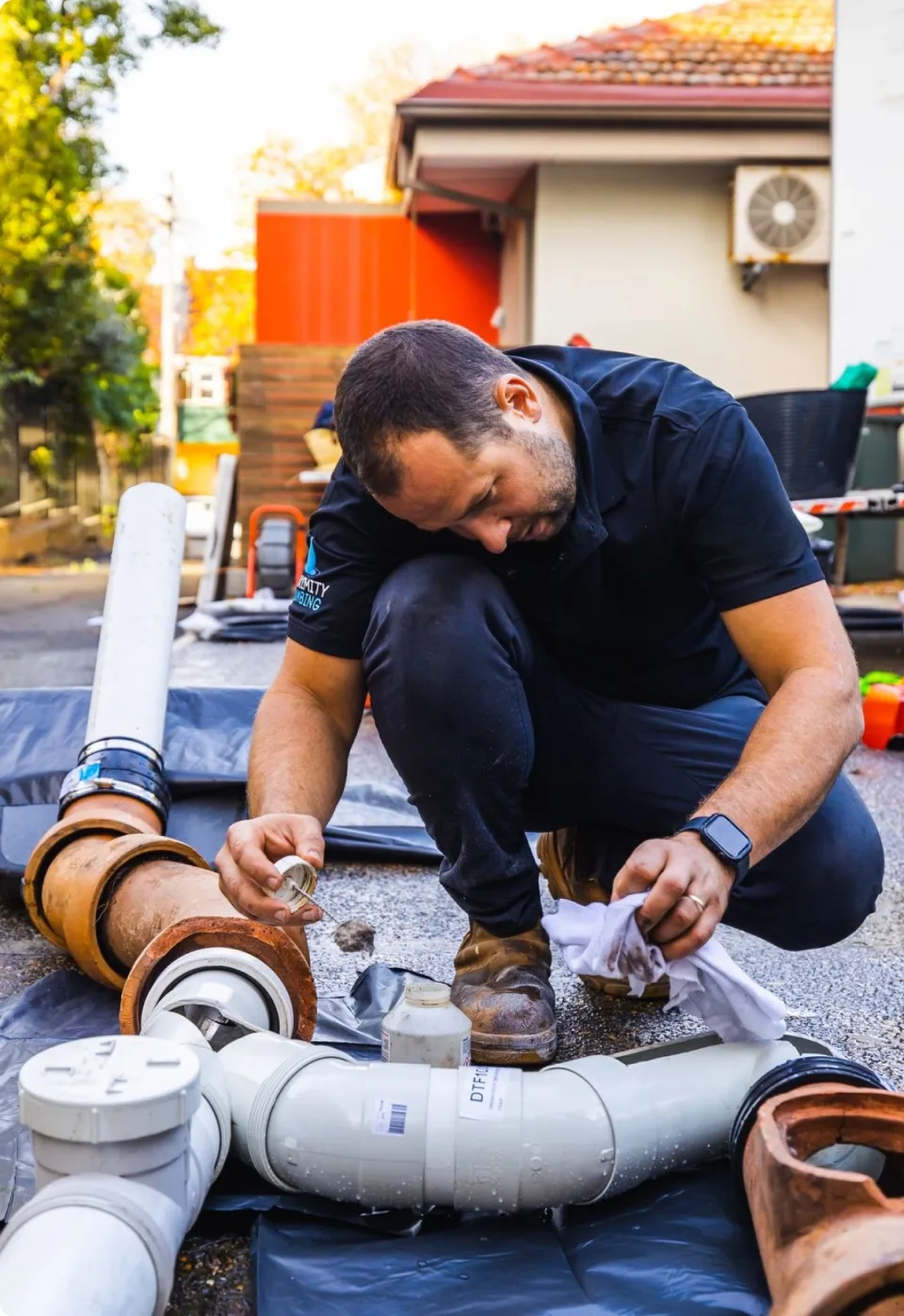
Ageing tanks in tightly held interwar bungalows
Bardwell Park is an unusually stable, owner-occupied suburb, and that stability shows up in its hot water. Homes stay in the same hands for decades, so plenty of storage units quietly run years past their design life before anyone thinks to check them.
Original tanks, original fittings
Age hides in plain sight
The hot water work we cover across Bardwell Park
Every job below is one focused page away, so you land on exactly the service you need rather than a wall of options:
Hot Water Replacement
When a tank is corroding, leaking or simply worn out, replacement swaps the tired unit for a right-sized modern system. We handle the disconnection, disposal and the new install in one visit wherever access allows, and match the new unit to the same fuel type unless there is a good reason to change.
Hot Water Installation
Fitting hot water where there was none, or relocating a unit during a renovation, is planned work rather than an emergency. We set the position, connections and compliance so the finished job suits how the household lives, then leave the paperwork and certificates behind with the invoice.
Hot Water Repair
A newer system with a single fault usually deserves a repair, not a replacement. We diagnose elements, thermostats, valves and burners, then quote the fix upfront so you can weigh it honestly against the age of the unit rather than being pushed toward a new one.
Gas Hot Water Systems
Gas storage and continuous-flow systems suit homes already connected for gas and households that draw heavily at peak times. We help you compare running costs and recovery speed before you commit, and check that the existing gas line can genuinely feed the unit you want.
Electric Hot Water Systems
Electric storage remains the simplest swap for many of the suburb's older houses, and off-peak options keep the running side sensible. We size the cylinder to your real morning demand, not a sales brochure, and keep the changeover clean where side access is tight.
Instant Hot Water Systems
Continuous-flow units heat on demand and free up the space a bulky tank once took. They reward households with steady usage, and we walk you through whether the flow rate genuinely matches your fixtures before you swap a reliable tank for one.
Cold valley winters and the strain on old systems
The suburb sits on the southern edge of the Wolli Creek valley, where cold air settles overnight and winter mornings bite harder than the exposed ridge streets above.
Winter is when tanks confess
Heavy tree cover, damp side yards

Repair or replace: which call actually saves you
The single most useful decision on any hot water job is whether to mend the unit in front of you or start fresh, and it turns on a few honest questions.
Repair usually wins when
Replacement usually wins when
We give you the numbers for both on-site, then leave the choice with you. There is never pressure to spend on a new system when a repair is the sound call.
Choosing gas, electric or instant
Fuel type shapes both your running cost and how the household experiences hot water, so it is worth getting right at replacement time rather than defaulting to whatever was there before.
Gas
Electric
Instant
Sizing then follows the people, not the plate: your peak morning draw and the number of bathrooms decide the capacity, and we settle that before quoting.

Sizing and placing the new unit
Getting the size and position right is half the value of a replacement, because an undersized tank leaves you cold and an awkward placement makes every future service harder.
Match capacity to the morning rush
Respect the block's constraints
Plan for the next decade
How it works
Steps to take while you wait
A hot water fault is rarely a flood-the-house emergency, but a few sensible moves protect the home and speed up the repair once we arrive.
Isolate the water. If the tank is visibly leaking, turn off the cold supply valve at the top of the unit to stop it refilling and spreading across the floor.
Kill the energy source. Switch the system off at its isolation point so a dry or damaged unit is not left drawing power or gas while it waits.
Clear the access. Move stored items away from a side-passage tank so your plumber reaches the valves and fittings straight away rather than working around clutter.
Note what you saw. Rusty water, a specific noise or the age off the compliance plate all help us arrive with the right parts on the first visit.
- 01
Isolate the water
If the tank is visibly leaking, turn off the cold supply valve at the top of the unit to stop it refilling and spreading across the floor.
- 02
Kill the energy source
Switch the system off at its isolation point so a dry or damaged unit is not left drawing power or gas while it waits.
- 03
Clear the access
Move stored items away from a side-passage tank so your plumber reaches the valves and fittings straight away rather than working around clutter.
- 04
Note what you saw
Rusty water, a specific noise or the age off the compliance plate all help us arrive with the right parts on the first visit.
What a changeover involves on the day
A planned replacement is a tidy job when it is scoped properly, and knowing the shape of the day takes the worry out of losing hot water for a few hours.
We confirm before we start. The plumber checks the unit, the connections and the access, then hands you the fixed written price so nothing about the job is a surprise once work begins.
Out with the old. The tired system is isolated, drained and disconnected, and the old unit is removed and taken away rather than left for you to deal with afterward.
In with the new. The replacement is set, connected, filled and tested, valves and tempering are checked, and the compliance certificate is completed so your home's paperwork trail stays complete.
We leave it working. Before the van moves on you have hot water running again, a tidy site, and a clear rundown of what was done and why it will last.
We confirm before we start
The plumber checks the unit, the connections and the access, then hands you the fixed written price so nothing about the job is a surprise once work begins.
Out with the old
The tired system is isolated, drained and disconnected, and the old unit is removed and taken away rather than left for you to deal with afterward.
In with the new
The replacement is set, connected, filled and tested, valves and tempering are checked, and the compliance certificate is completed so your home's paperwork trail stays complete.
We leave it working
Before the van moves on you have hot water running again, a tidy site, and a clear rundown of what was done and why it will last.
Getting more years from your system
A little attention across a system's life delays the day you need a replacement, and most of it costs nothing but a moment of noticing.
Watch the relief valve. A gentle discharge when the tank heats is normal, but a constant weep or a bone-dry valve both point to a fault worth checking before it grows.
Have the anode checked. On storage tanks the sacrificial anode does its quiet work until it is gone, and a timely swap can add years to a cylinder that would otherwise start to rust.
Keep the surrounds clear. In the shaded, damp side yards common here, leaf litter and stored clutter trap moisture against the casing, so a clear, ventilated spot helps the fittings last.
Act on the small signs. A slight drop in temperature, a new noise or a faint tinge of rust are quick to investigate early and costly to ignore until the morning of no hot water.
Watch the relief valve
A gentle discharge when the tank heats is normal, but a constant weep or a bone-dry valve both point to a fault worth checking before it grows.
Have the anode checked
On storage tanks the sacrificial anode does its quiet work until it is gone, and a timely swap can add years to a cylinder that would otherwise start to rust.
Keep the surrounds clear
In the shaded, damp side yards common here, leaf litter and stored clutter trap moisture against the casing, so a clear, ventilated spot helps the fittings last.
Act on the small signs
A slight drop in temperature, a new noise or a faint tinge of rust are quick to investigate early and costly to ignore until the morning of no hot water.
How it works
How a hot water job works
- 01
Call us and talk to a plumber
Speak to a licensed plumber, not an answering machine. Tell us what's going on and we'll tell you what happens next.
- 02
We turn up when we say we will
Your plumber arrives on time, in a stocked van, ready to start, not ready to have a look and come back next week.
- 03
Fixed price before we lift a spanner
You get the full price in writing before any work begins. No surprises, no obligation. If you say no, that's fine. The call out cost you $0.
- 04
Fixed right, backed for life
The work is done properly, tested, and covered by our Lifetime Labour Warranty. If it's not right, we come back. No questions. No cost.
Why homeowners here choose us
The price we quote is the price you pay. No exceptions
Every job is priced upfront, in writing, before work starts. Weekend or weekday, day or night, with no overtime surprises.
$0 Call Out Fee
Getting us to your door costs nothing. You only ever pay for work you've approved.
Licensed & insured, Lic #275278C
Every plumber on the team is fully licensed and insured. Your compliance certificates are sorted, every time.
Lifetime Labour Warranty
Our workmanship is guaranteed for life. If it's not right, we come back. No questions. No cost.
Fair, upfront pricing. No surprises.
Upfront fixed pricing, no hourly surprises
Upfront fixed pricing. No hourly surprises.
We don't charge by the hour, and we don't do estimates that grow. Your plumber assesses the job, gives you a fixed written price, and that's what you pay. The price we quote is the price you pay. No exceptions.
- $0 call out: the assessment and quote cost you nothing
- One fixed price, in writing, before any work begins
- No overtime rates: nights and weekends priced the same way
- Card, cash and payment plans accepted
No surprises, no obligation. If the price doesn't work for you, you owe us nothing.
The price we quote is the price you pay. No exceptions.
Where we work and what else we do
One crew, the whole trade
Familiar ground next door
When the fault sits outside hot water, follow the trade: our emergency plumbing team handles the after-hours crises, general plumbing covers the taps, toilets and leaks around the house, and drainage tackles the blocked and ageing clay lines under the old blocks. Everything ties back to home.
Ready for hot water again in Bardwell Park
Need a plumber in Bardwell Park? We're ready now.
Call (02) 9072 0502 and speak to a licensed plumber, not an answering machine, 24/7, including weekends and public holidays. Prefer a callback? Leave your details and we'll call you back fast, day or night.
Call (02) 9072 0502. $0 call out, fixed price before any work begins.
Good questions, straight answers
Hot water questions from Bardwell Park locals
How long does a hot water system usually last in a Bardwell Park home?
Storage tanks typically last a dozen years or so, and plenty in the suburb's tightly held interwar bungalows keep running long beyond it, so we always weigh a unit's age before advising a repair.
Should I repair my hot water system or replace it?
One worn component on a reasonably new unit is worth mending, while a tank that leaks from the cylinder or keeps failing has reached the end of its life and a fresh system is the wiser outlay.
Do you fit both gas and electric hot water systems?
Yes, we install and service gas, electric and instant hot water systems, and we match the fuel type to your existing connections and the way your household actually draws water.
Why does my hot water seem to run out faster in winter?
Cold air pooling in the Wolli Creek valley drops the incoming water temperature, so the tank works harder and empties sooner, and a tired element or thermostat makes the shortfall far more obvious.
What size hot water system does my household need?
Sizing follows the number of people and your peak morning demand rather than a guess, and we work it out on-site so you are not left short or paying to heat water nobody uses.
Is there a call out fee for hot water work in Bardwell Park?
There is no call out fee at all; it is $0, and you receive a fixed written price before any work starts, so the assessment and quote cost you nothing either way.
Can you replace a storage tank tucked beside an older double-brick bungalow?
Yes, tight side passages and original double-brick walls are the norm here, and we plan access, disconnection and the new unit's position before the day so the changeover stays clean.